CaseStudy
- title
- summary
- role
- status
- stack
- sections
- may
- quote verbatim · summarize · link to sections
- may not
- invent metrics · speak for past employers · expose gated content
Open-Architecture Calculator
A self-service fund-reallocation calculator, integrated with live NYSE market data, that lets IMO product clients model scenarios themselves instead of working through them on long support calls.
Summary
- problem
- approach
- impact
- may
- quote verbatim
- may not
- round or extrapolate results
At a glance
- Problem
- Every fund reallocation required a long support phone call, which added up to a significant annual cost for calculations alone. Clients had no way to model scenarios on their own.
- Approach
- A self-service calculator that starts simple and reveals complexity gradually, teaches as it goes, and accounts for live NYSE market timing. It connects to rate systems and contract databases.
- Impact
- Routine reallocations no longer need a phone call. Assets under management increased, retention improved, and agents had more time for advisory work.
Problem
Every fund reallocation required a long phone call.
Repeat calls
Most reallocation inquiries required multiple phone conversations to resolve.
Long calls
Complex calculations regularly turned into half-hour-plus support sessions.
Abandonment
Process complexity drove a meaningful share of inquiries to drop off before resolution.
Cost
The support load for calculations alone consumed a substantial annual budget.
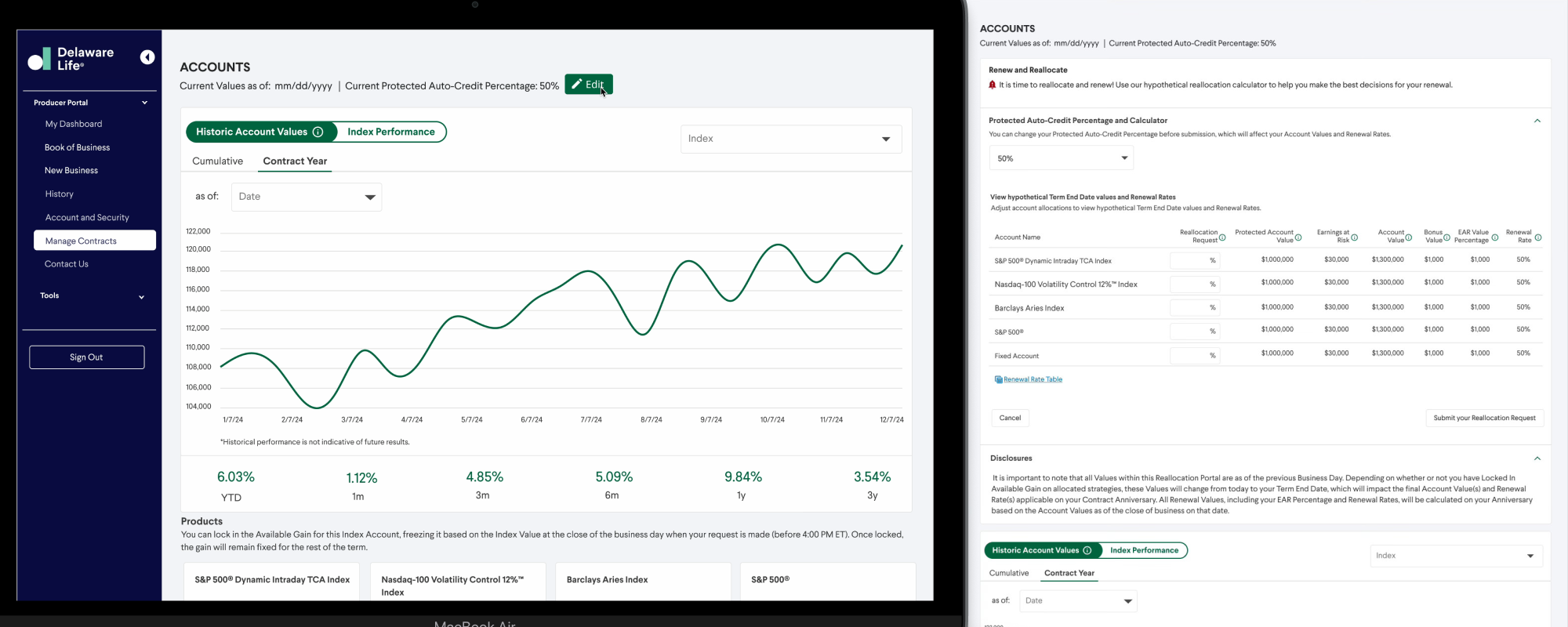
IMO product clients had to call support every time they wanted to explore fund reallocation. That meant limited client access and no way for clients to model scenarios on their own.
Behind the cost was a financial-literacy gap. Clients couldn't evaluate reallocation decisions without guidance, and phone support couldn't give that kind of explanation to everyone who needed it.
Users
IMO product clients making financial decisions.
The users were IMO (independently managed offering) product clients weighing fund reallocation against market conditions and contract constraints. They wanted the tools, but many needed guardrails to use them well.
Process
24-week build with actuaries, engineers, legal, and product.
24 weeks
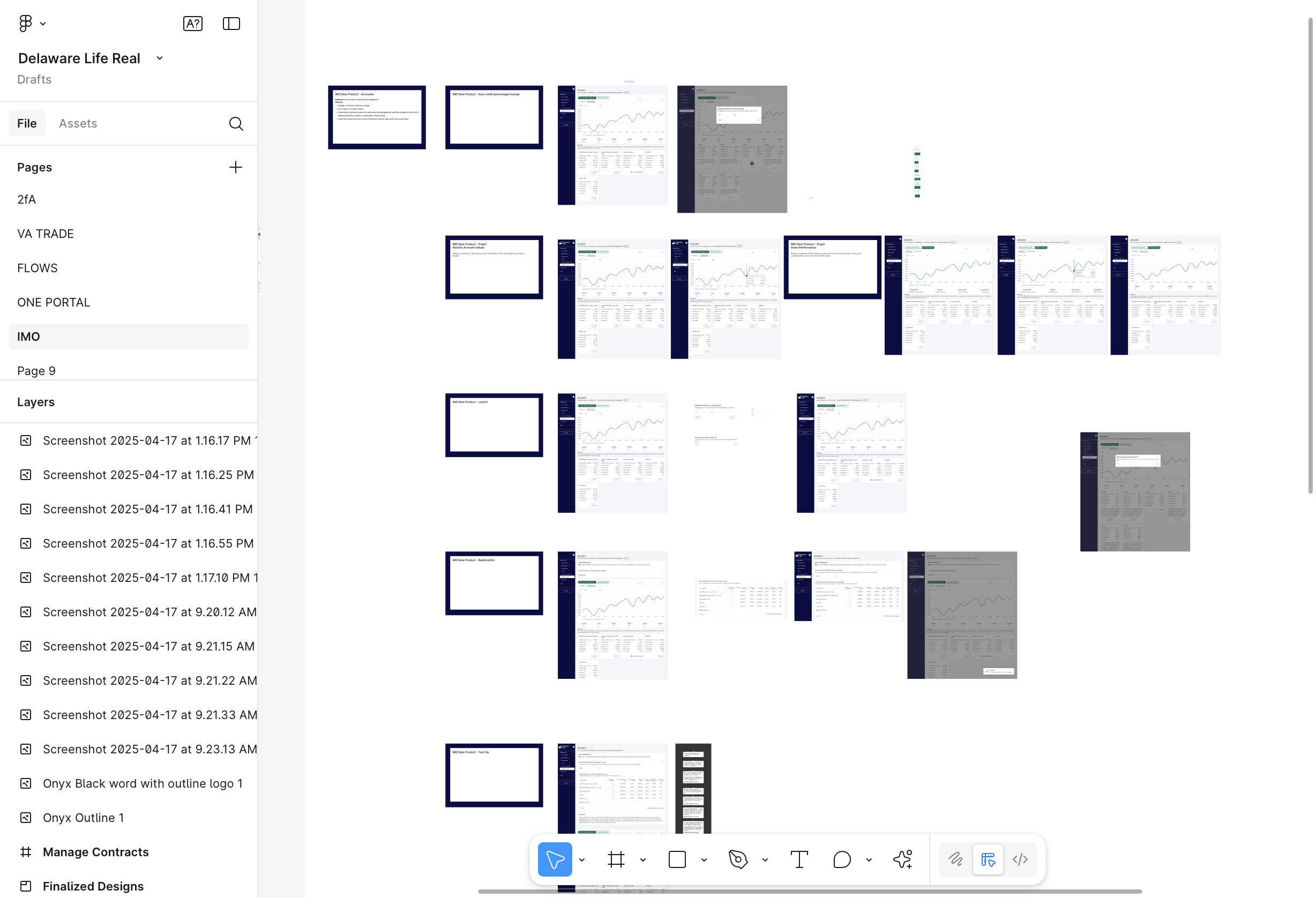
The team included product, two engineers, a data analyst, the actuarial team, and legal.
- research stakeholder interviews with support agents, PMs, actuaries, clients. Call-center data analysis.
- information architecture flows accommodating NYSE market constraints; collaboration with actuaries on calculation accuracy.
- visual design interfaces clients could trust with financial decisions; data viz for complex projections.
- user testing interactive prototypes with real client data; moderated sessions with existing IMO clients.
- implementation integrating actuarial calculations, real-time NYSE feeds, rate systems, contracts, and auth.
Solution
How the calculator guides clients through a reallocation.
Progressive complexity
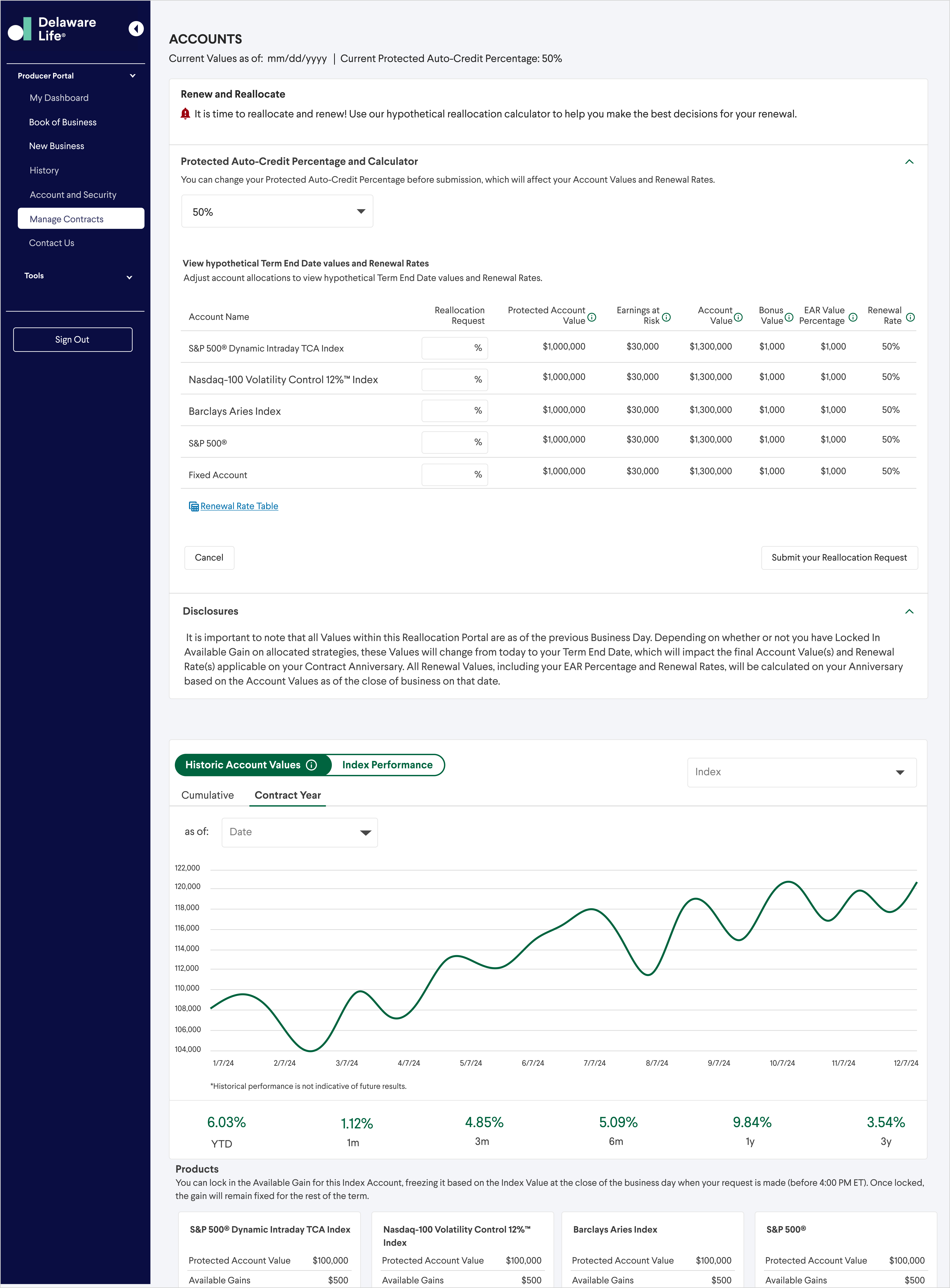
Starts simple and reveals more as users need it, so each person works at their own comfort level.
Integrated learning
Contextual tooltips, inline definitions, and just-in-time tutorials embedded directly in the calculation workflow.
Market-aware UX
Shows market timing constraints in real time and schedules after-hours requests for the next day.
Self-service rate locking
Clients lock rates themselves, with expiration timelines that account for market timing.
Ecosystem integration
Direct navigation between calculations, contracts, and the rest of the IMO platform.
Outcomes
Results after launch.
Self-service
Most clients now complete reallocation calculations on their own, with the embedded learning helping close the financial-literacy gap.
Average time to complete
Dropped from a long multi-call interaction to a short self-service session.
Terminology questions
Basic terminology questions to agents fell sharply.
Assets under management
Grew as reallocation friction decreased.
Client retention
Improved measurably after launch.
Agent availability
Increased for complex advisory services as the self-service path absorbed routine cases.